
Loading...
Serving Southfield, MI and surrounding areas. (248) 686-3918
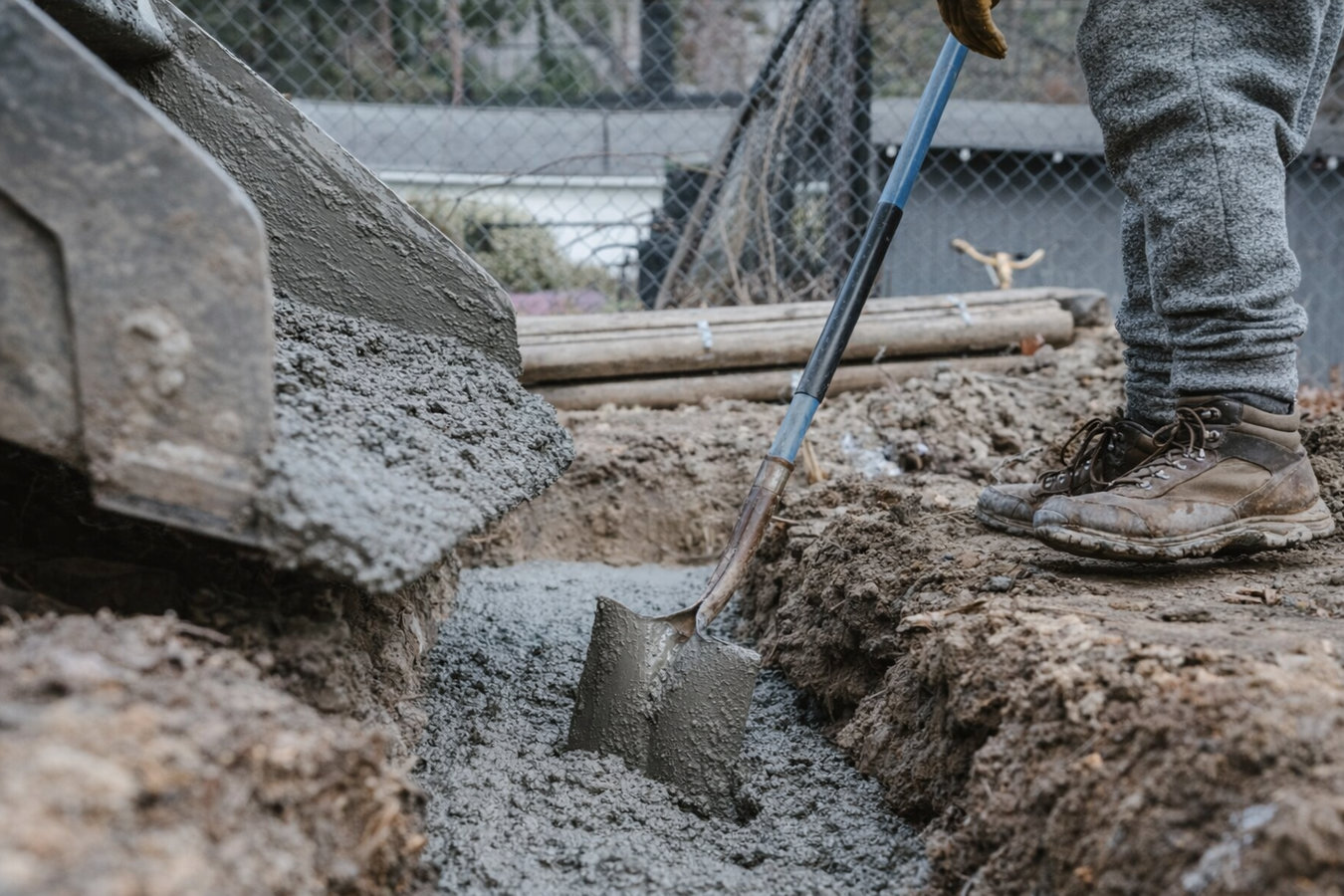
Building a deck, garage, or addition? Footings that do not go deep enough will heave with Michigan frost every winter. We dig below the line, pull the permit, and get the inspector sign-off before a drop of concrete goes in.
Concrete footings in Southfield are the underground concrete bases that hold up everything above them - your deck, garage, porch, or addition - and they must be dug below Michigan's frost line, typically around 42 inches, so the ground freezing in winter cannot push them upward and damage the structure.
If you are adding a deck, sunroom, or garage to your Southfield home, footings are the first conversation to have before any framing begins. Getting the depth and reinforcement right at the start prevents the tilting, cracking, and door-frame shifting that shows up when footings are undersized for Michigan conditions. Homeowners whose projects involve an existing or new concrete slab often look at foundation installation as a related scope - the two often come up together when a project involves both a floor slab and the structural footings that support walls above it.
Most footing projects in Southfield require a city permit, which means an independent inspector checks the depth and dimensions before the pour. That inspection protects you - it is a second set of eyes confirming the work is correct before it is buried and invisible forever.
If your deck boards are no longer level or the structure has visibly shifted away from your home's exterior wall, the footing underneath may have moved. In Southfield, this often happens after a hard winter when frost pushes shallow footings upward. A shifted footing means the whole structure above is under stress - this is not a cosmetic issue.
Any structure attached to your home or sitting on a permanent foundation needs proper footings before anything else is built. If you are in the planning stage for a project like this, footings are the first conversation to have - not an afterthought. Getting this right at the start saves you from expensive corrections later.
Cracks that run along the perimeter of a slab - especially ones wider at the top than the bottom - often signal that the footing beneath has settled unevenly. Southfield's clay soil shifts as it absorbs and releases moisture through the seasons, and footings not sized for local conditions are the first to show the strain.
When a footing shifts, the frame of the structure above shifts too - and that movement shows up in doors and windows that suddenly do not operate as they used to. If this is happening near a garage, sunroom, or addition rather than in the main house, the footing under that structure is worth a professional look.
Our footing work covers the full process - from the initial site visit and written estimate through permit filing with the City of Southfield, digging to the required depth, setting forms, placing steel reinforcement, calling for the city inspection, and pouring the concrete once the inspector has signed off. Every footing we pour includes rebar sized for the structural load and the local soil conditions. For Southfield properties with clay-heavy ground, we size the base width to account for the soil movement that happens through Michigan's wet seasons. If your project also involves a full concrete slab - for a garage floor or room addition - we coordinate the footing and slab work together so the pour sequence is correct and the curing timeline matches your contractor's framing schedule. Homeowners building larger site improvements who also need foundation raising on an existing structure can discuss both scopes at the same estimate visit - we assess each independently and give you a clear picture of what each involves.
We work on both residential and light commercial projects in Southfield. Residential footing work covers decks, attached and detached garages, sunrooms, covered porches, and additions. For mid-century Southfield homes - most of which were built between the 1950s and 1970s - we routinely encounter older utility lines, buried concrete from previous structures, and compacted clay fill. We use MISS DIG 811 to mark lines before any digging begins, and we document any surprises in writing before doing anything that affects your estimate.
Best for residential decks, covered porches, and pergolas that need frost-depth footings to stay level through Southfield winters.
Suits attached and detached garages, room additions, and sunrooms where the footing must carry significant structural load above it.
For load-bearing columns, fence posts requiring permanent concrete bases, or structural steel posts on residential or light commercial properties.
For existing footings that have shifted, cracked, or were originally poured too shallow for Michigan's frost depth - we remove and repour to current depth requirements.
The ground in Southfield freezes to a depth of about 42 inches in a typical winter - and some years it goes deeper. Every footing has to be dug below that line, which means more digging, more concrete, and more labor than you would need in a warmer state. This is not optional: a footing that does not go deep enough will heave with the frost and damage whatever sits on top. This depth requirement is one reason footing costs in Michigan run higher than national averages, and it is worth factoring in when you are comparing quotes. A low bid that does not mention frost depth is worth a second look. The Portland Cement Association provides guidance on footing depth and cold-weather concrete practices that apply directly to Michigan conditions.
Beyond frost depth, Southfield's clay-heavy soil expands when it absorbs water and contracts when it dries out - that movement puts ongoing stress on footings through the seasons. A concrete contractor familiar with this area accounts for clay conditions when sizing the footing base, not just when deciding how deep to dig. We serve clients across the area, including homeowners in Pontiac and Bloomfield Hills who face the same Oakland County frost and clay conditions - and we bring the same depth requirements and base sizing to every project regardless of city.
We walk your property, assess the soil and drainage in the area where footings will go, and check access for equipment. We also verify utility line locations through MISS DIG 811 before any digging is planned. You get a written estimate that breaks out labor, materials, and permit fees separately so you can compare it fairly against other bids. We reply within one business day.
We pull the building permit from the City of Southfield before any work begins - this is required by law and sets up the city inspection that happens before the pour. Permit processing takes a few business days to a couple of weeks depending on the city's workload. We keep you updated during this window so you are not chasing us for information.
The crew digs to the required depth - well below Southfield's frost line - sets the forms, and places the steel reinforcement. Before any concrete goes in, a city inspector visits to verify the depth and dimensions are correct. Once the inspection passes, the pour proceeds. This step can take one to two days depending on project size.
The concrete is poured, the forms are held in place while it begins to set, and the crew cleans up the site. Forms come off in one to three days. We walk you through the curing timeline and when it is safe for your framing contractor to start. You leave with a clear picture of what is underground and confidence in what holds your project up.
Free written estimate, permit handled, inspector sign-off guaranteed before the pour.
(248) 686-3918Southfield's frost line sits around 42 inches - deeper than what is required in most of the country. We dig to depth on every project without needing to be asked. That extra depth is what keeps your deck or garage from shifting after the first hard winter.
We pull the permit and schedule the city inspector for every footing project - no exceptions. That inspection is your assurance that the depth and dimensions are verified by a third party before the concrete goes in and the work becomes invisible. A contractor who suggests skipping it is not protecting you.
A large share of Southfield's homes were built between the 1950s and 1970s - and older Southfield properties frequently hide buried concrete, compacted fill, and undocumented utility lines. We use MISS DIG 811 to mark lines before digging and document any surprises in writing before they affect your estimate.
You get a written estimate that separates labor, materials, and permit costs before we pick up a shovel. This lets you compare bids accurately and makes sure no cost shows up mid-project that was not in the original conversation. What is in the estimate is what you pay - barring something genuinely unexpected underground, which we tell you about immediately.
When the footings are done right, everything built on top of them stays straight, level, and usable for decades. That is the whole point - and it is why we do not cut corners on depth, reinforcement, or the permit process. Call us to get started and we will give you a straight answer on what your specific project needs.
If an existing foundation has dropped or shifted, foundation raising brings it back to level - a different scope from new footings but often assessed at the same visit.
Learn MoreNeed a complete foundation for a new structure rather than standalone footings? Foundation installation covers the full perimeter and floor system as one coordinated project.
Learn MoreContractors book up quickly once the ground thaws in April. Reach out today to lock in your estimate and start date before the rush.